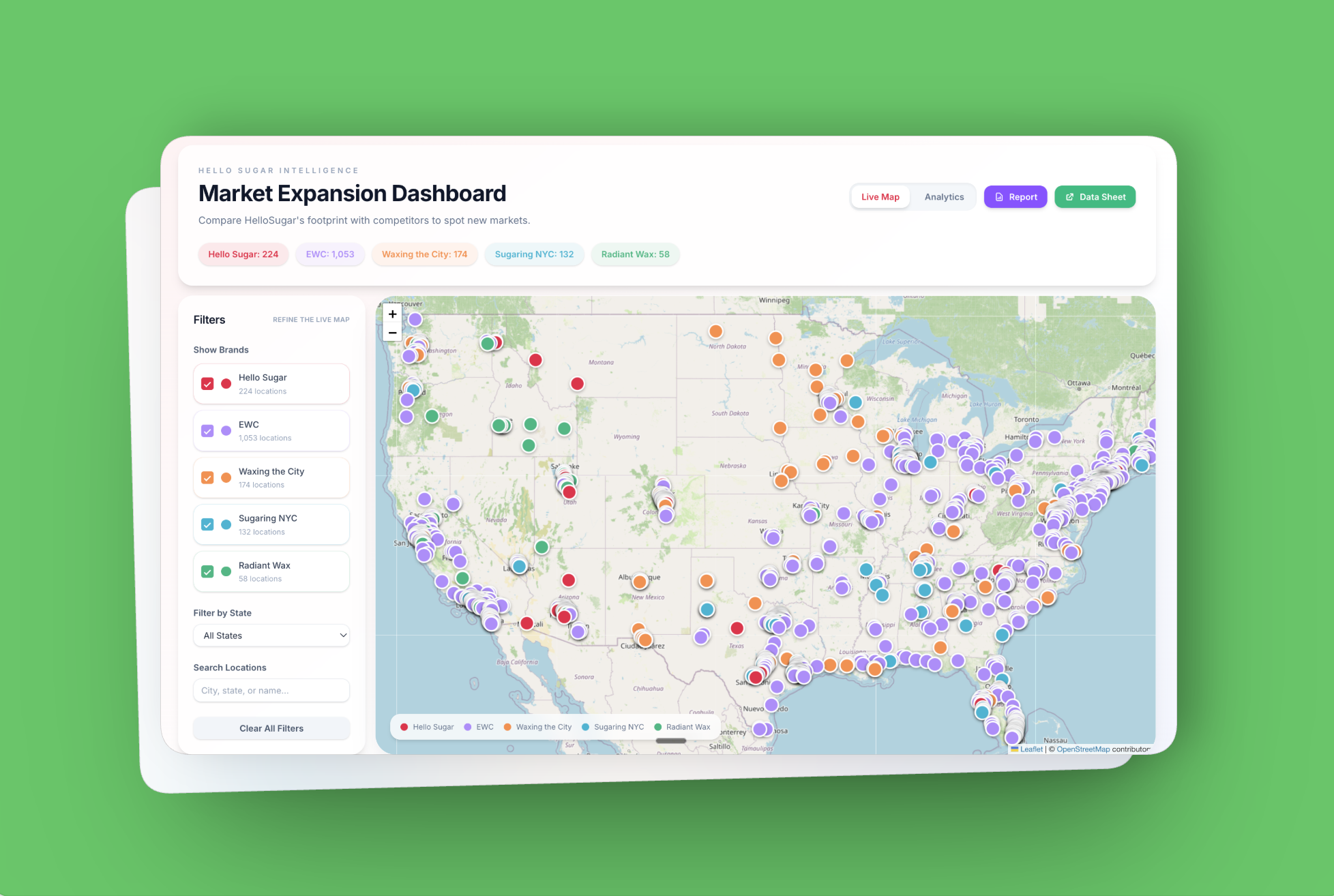
Competitive intelligence platform tracking HelloSugar and four competitor brands across 1,600+ locations nationwide. Used during the company's $70M private equity close.
HelloSugar had no way to see what competitors were doing. Where were they opening new stores? Where were they shutting down? Which markets were saturated and which ones were wide open? Leadership was making expansion decisions without any data. When private equity came to the table, there was nothing to show where HelloSugar stood relative to the competition.
Nobody asked me to build this. I noticed competitive questions kept coming up in leadership conversations without good answers, so I built the tool to answer them.
I researched how competitor location data was structured. Each brand exposed their data differently: store locator sitemaps, REST APIs, JSON-LD structured data, Zenoti booking APIs. That determined the scraping architecture. I also identified early that the data would never be 100% clean. Competitors don't update their own websites consistently, so I built verification links into every report so the team could confirm closures with one click.
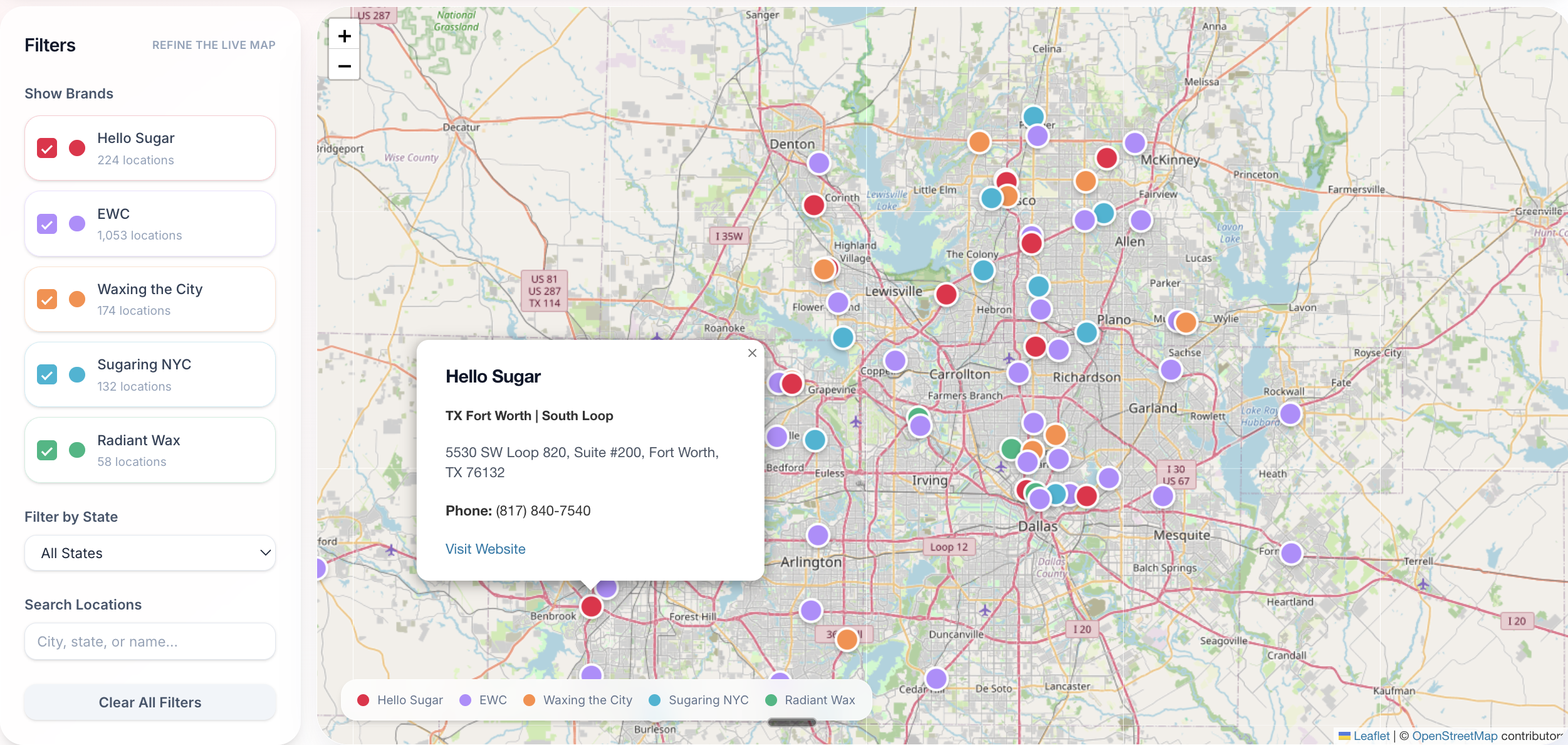
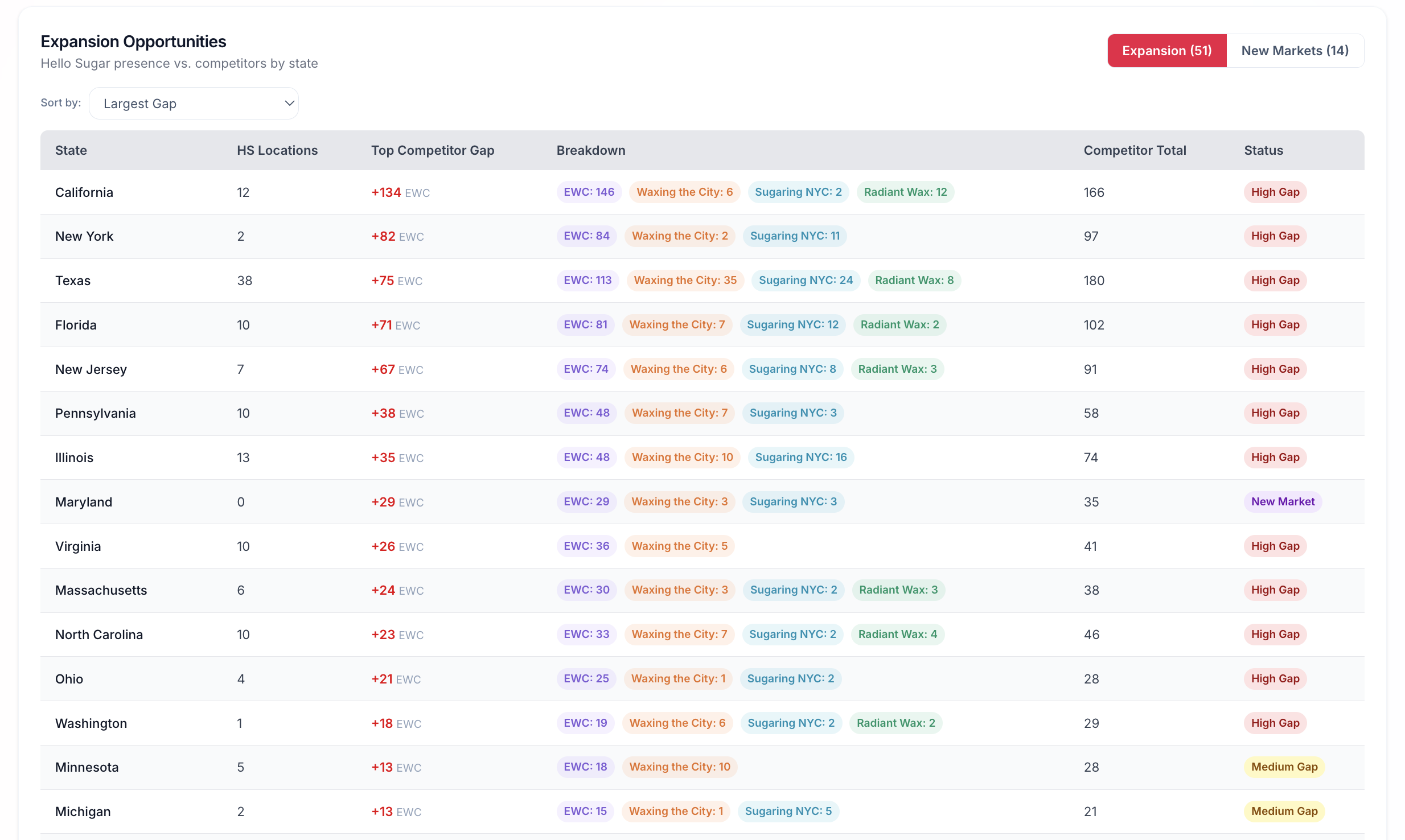
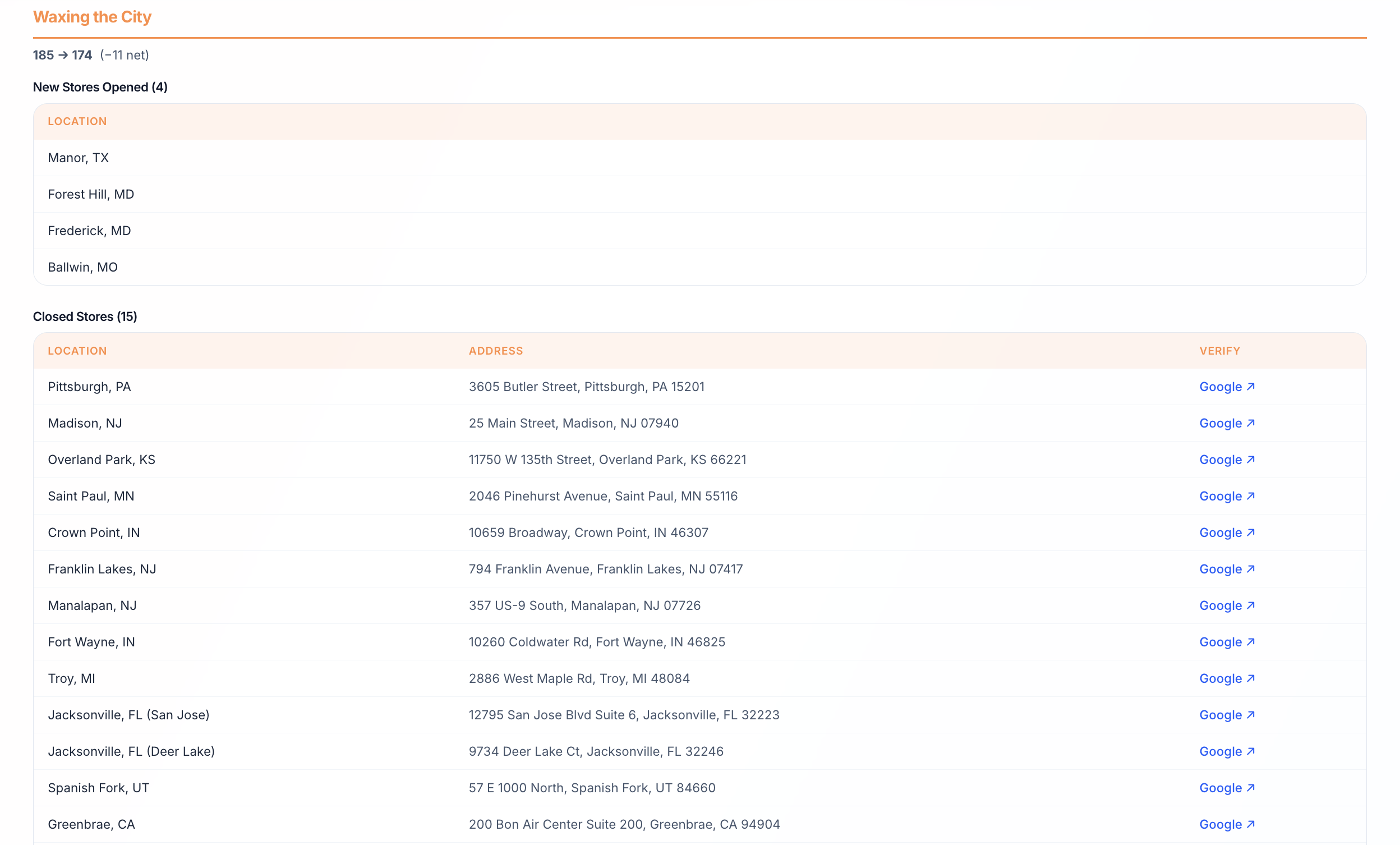
I built Python scrapers for four competitor brands. Each one pulls from different sources: sitemaps, REST APIs, JSON-LD structured data, booking APIs. Every month the scrapers run and output standardized data. A diff system compares the current snapshot to the previous month and flags what changed: stores that opened, stores that closed, and where the gaps are.
The dashboard is a React app with an interactive Leaflet map. Every HelloSugar and competitor location is color-coded by brand. The analytics layer breaks down market share by state, highlights markets where competitors are present but HelloSugar has zero locations, and generates a monthly report with one-click Google verification links so the team can confirm whether a closure is real.
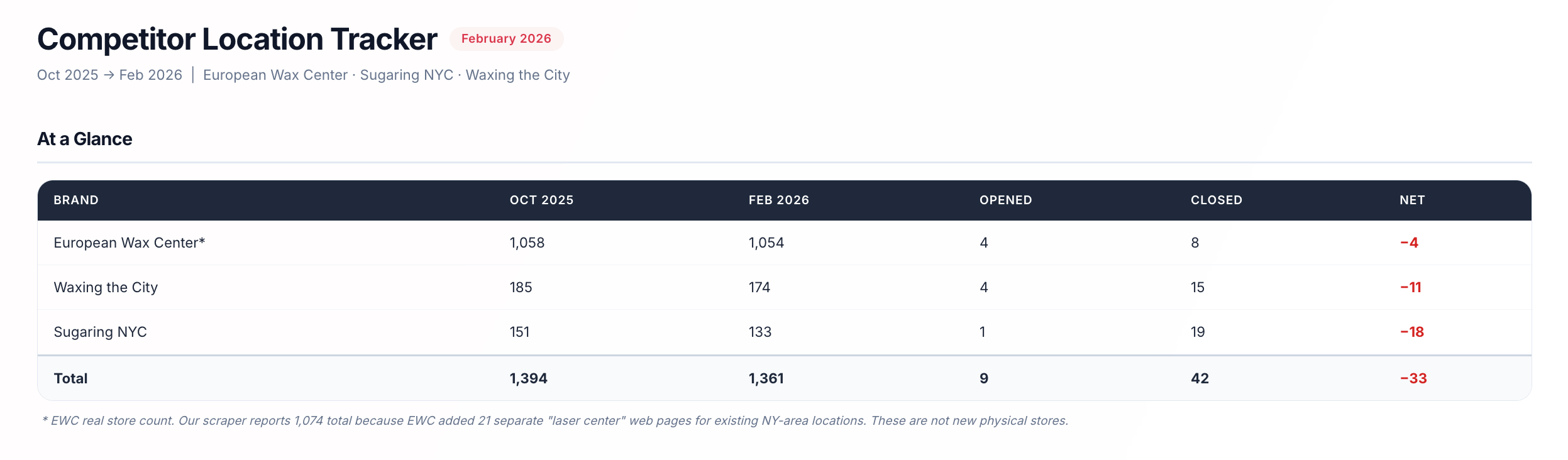
Leadership used this in every presentation to private equity firms. It was the data behind HelloSugar's competitive positioning and growth story. It directly supported closing a $70M deal.
It also powers the acquisition strategy. When a competitor store closes, the team moves to acquire the location and convert their customers. This tool surfaces those opportunities every month.
The team still uses this monthly to identify acquisition targets and expansion opportunities. This isn't a one-time deliverable. It's infrastructure.