
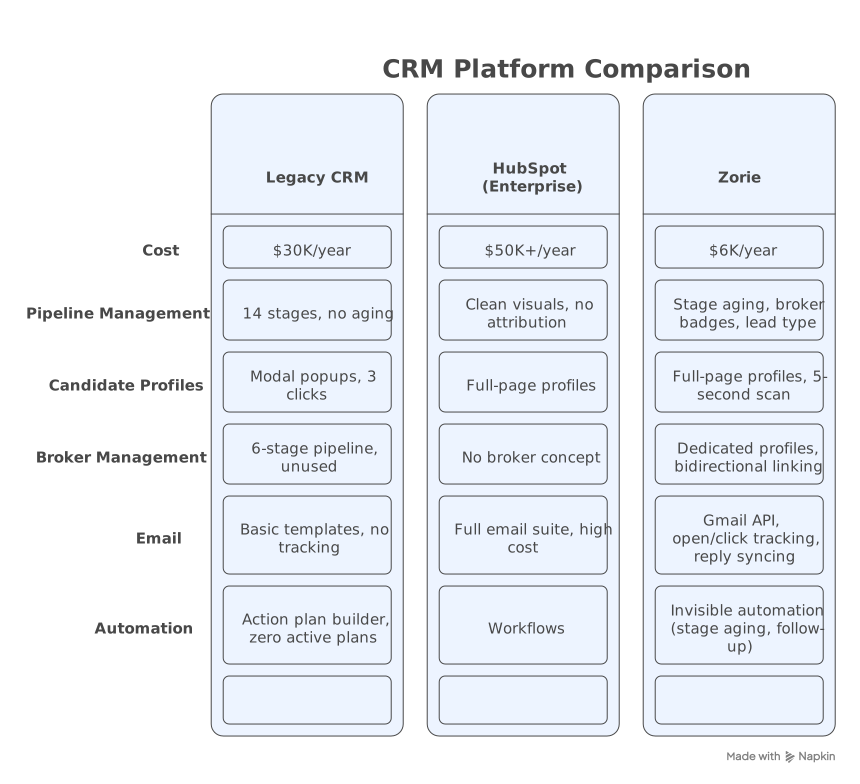
Custom CRM I built to replace a $30K/year vendor for HelloSugar's franchise sales team. In production.
HelloSugar's Director of Franchise Sales was paying $30K a year for a CRM that didn't match how she actually worked. Candidate profiles opened in modals on top of the pipeline. Three clicks just to see basic contact info. Broker info was buried at the bottom of the page. Email history lived on a separate tab that mixed 60+ event types together, so nothing was easy to find.
She'd already tried to fix it herself. She built her own CRM in Replit with Python and Flask. 15 database tables, full pipeline logic, Gmail integration, even an AI writer. About 40% of it was broken. But that didn't matter. What mattered was what she cared about enough to build herself: a clean pipeline view, email tracking that actually worked, and seeing a candidate's full story on one screen.
The existing CRM had 47 features. The sales team used 12 of them. The rest were tools for a different job.
I spent two weeks embedded with the sales team before I wrote any code. No wireframes, no prototypes. Just research. Four sources fed every build decision:
Analyzed through Fathom. I watched how she ran intro calls, unit economics walkthroughs, FDD reviews, and territory mapping sessions. I mapped what information she reached for mid-call, what tools she switched between, and where the CRM slowed her down.
Logged in with the team's credentials and documented every feature, every screen, every workflow. The broker pipeline had six stages. None were used. The automation builder was buried three levels deep with zero active plans.
This was the most valuable source. When someone builds their own tool, they're telling you what matters through action, not words. Every feature she attempted was a signal about what the production CRM needed to do.
She recorded a 30-minute Loom walking through what she missed about HubSpot. Clean interface, email history on the contact page, the pipeline view. If HubSpot did it and she still talks about it, I need to match or beat it.
The output was a feature gap analysis comparing all four sources across 16 categories. Every feature was tagged as Sprint 1, Sprint 2, Sprint 3+, or Skip with a specific reason.
I audited the existing CRM and cataloged every feature across 16 categories. Then I compared it against three other sources: the Replit CRM she built herself, HubSpot, and what she told me directly across two walkthrough calls.
The analysis showed that 35 of the 47 features were either unused, broken, or built for the wrong job. But it also showed gaps. No full-page candidate profiles. No stage aging on pipeline cards. No broker-to-candidate linking that actually worked. No way to see email history without leaving the profile. These were the things the sales team needed every day and didn't have.
Every feature in Zorie maps back to this analysis. If it's in the app, there's a documented reason from one of the four sources. If it's not in the app, there's a documented reason for that too.
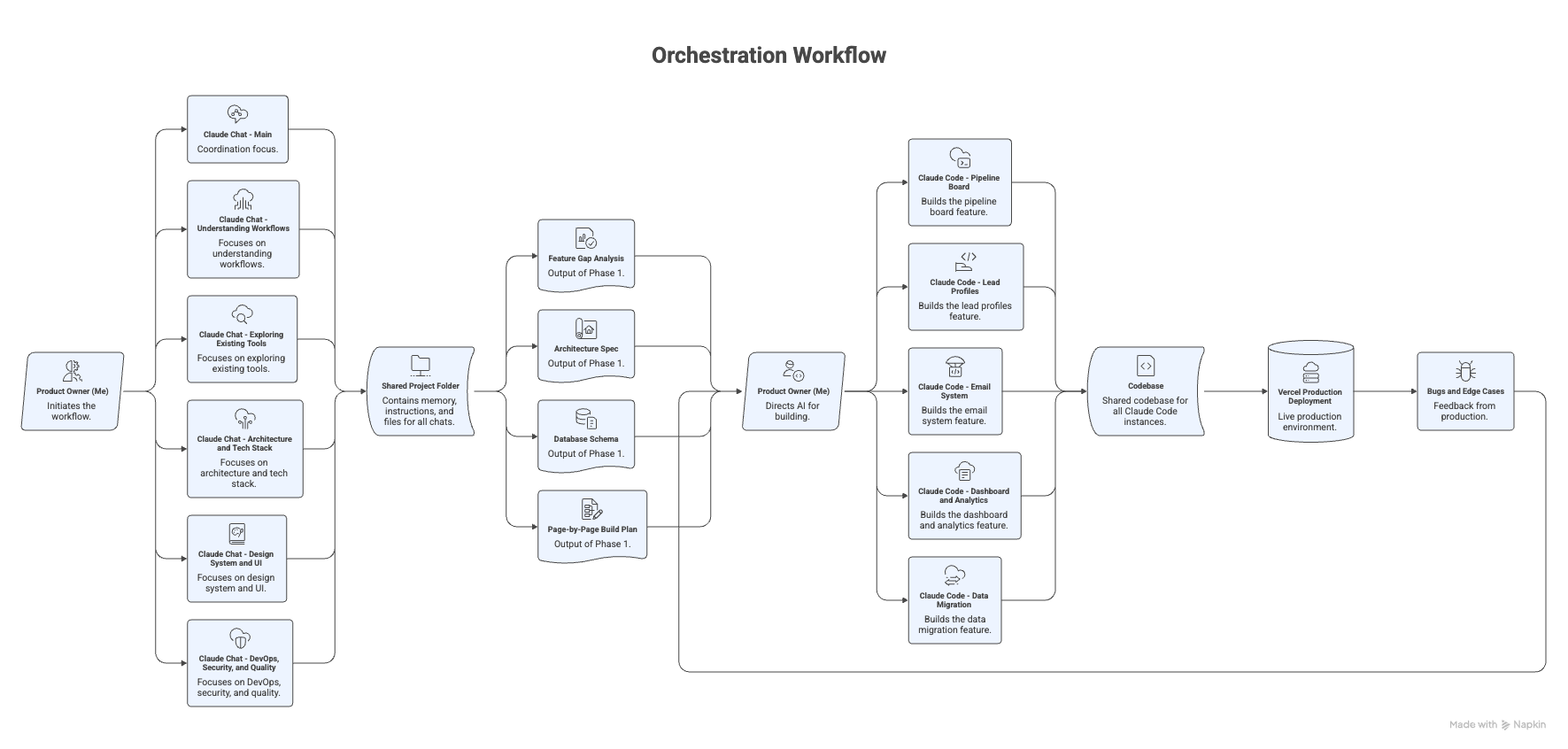
I'm a solo developer. No engineering team, no designers, no QA. I used Claude as my entire development organization, running multiple instances at the same time with different roles.
I acted as product owner, architect, and PM. Claude Desktop handled planning, architecture decisions, and documentation. A separate instance handled UI design direction. Claude Code handled all implementation: reading the codebase, writing features, running builds, and pushing to production. Vercel deployed on every push to main.
The key insight: the output of each layer becomes the input to the next. A planning session produces an architecture document. That document becomes the prompt for Claude Code. Claude Code reads the codebase, writes the implementation, and runs the build. If it passes, it pushes. If not, it debugs.
This isn't about AI writing code for me. It's about knowing exactly what to build and communicating it clearly enough that the code comes out right.
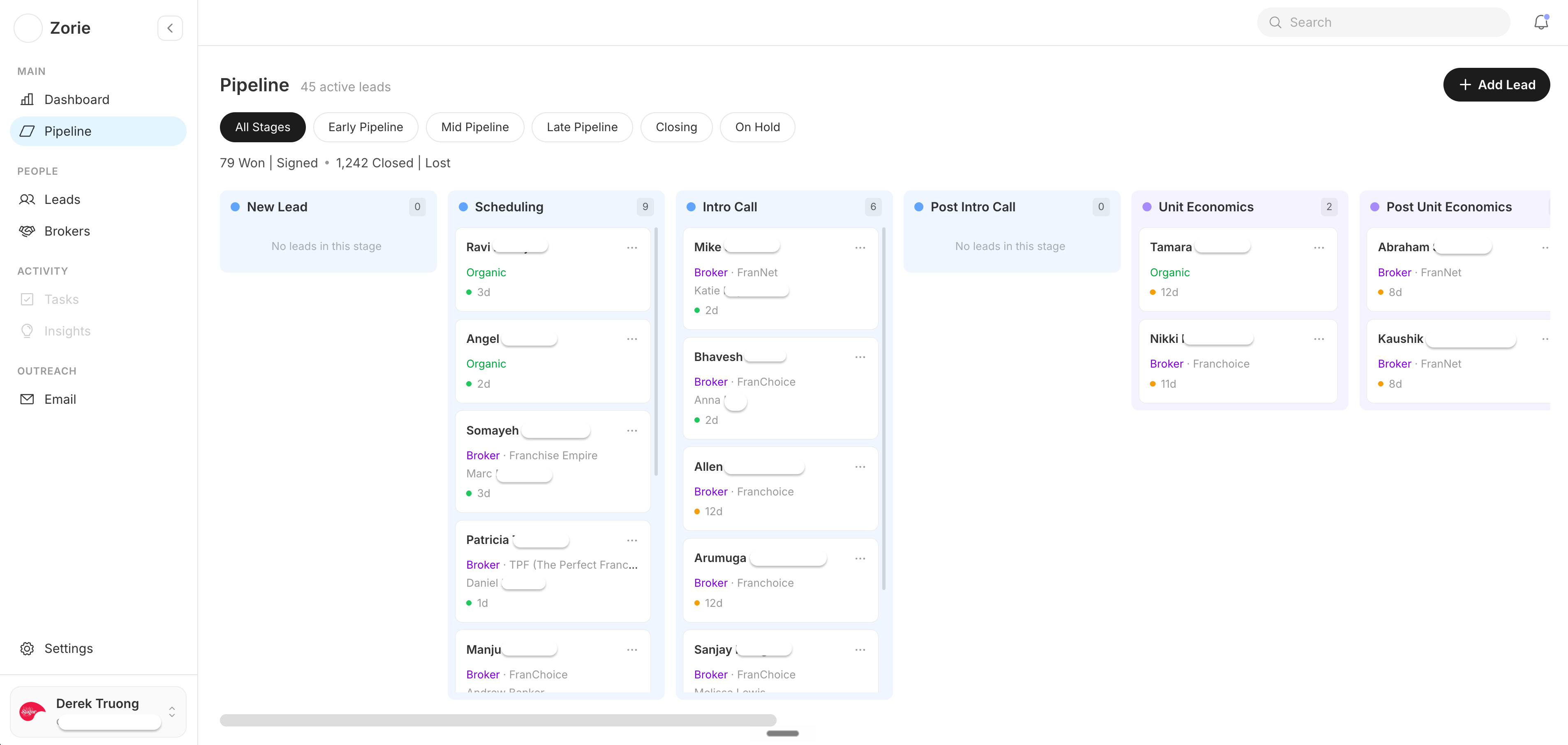
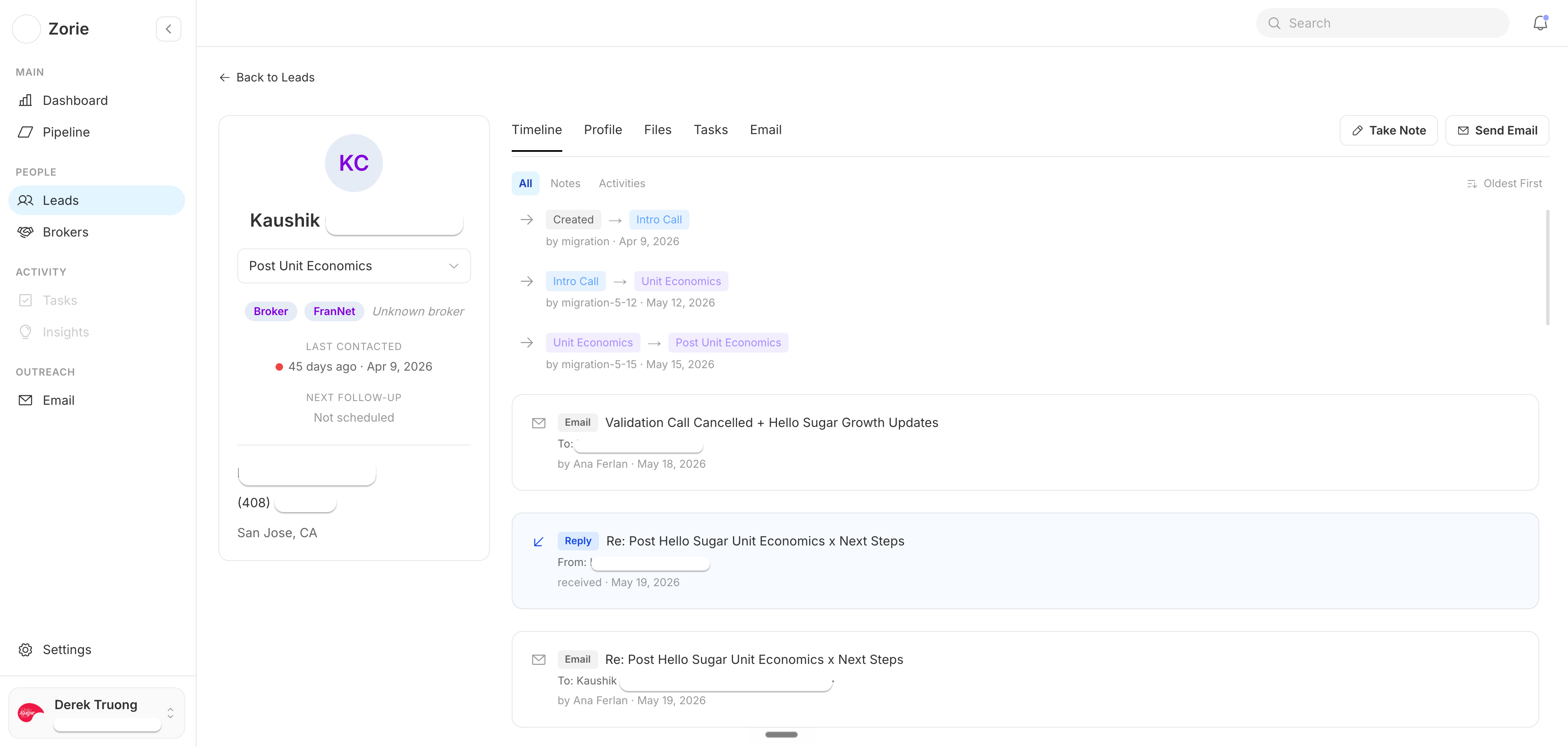
Zorie is in daily production use by HelloSugar's franchise development team. It replaced a $30K/year platform that the team used 12 of 47 features on. Every feature in Zorie was built from documented research, and every feature that was skipped has a documented reason. HelloSugar was acquired in a $70M PE deal in 2026. Zorie was designed from the start to scale across other brands in the portfolio.